Stretching it has not fixed it for a reason.
You have foam rolled it, stretched it, had it worked on, and changed your pillow twice. It loosens for a day and comes back to exactly the same spot. That is not a discipline problem. It usually means the thing driving the tightness is not the tight muscle.
Muscles at the top of your shoulder do not brace for no reason. When upper cervical joints lose motion, or the mid-back stops contributing its share, your nervous system recruits whatever is left to hold your head up all day. The tension is a strategy, not a fault, and it will keep returning until something changes the reason for it.
Neck pain rarely stays in the neck.
The nerves that leave the cervical spine travel into the head and down the arms, so a restriction at one level can show up somewhere you would never connect to your neck.
Losing Rotation
Checking a blind spot means turning your shoulders instead of your head, and one side has clearly given up more range than the other.
Ache at the Skull Base
A gripping ache where your neck meets your head that shows up in the afternoon and follows a long stretch in front of a screen.
Headaches From the Neck
A one-sided headache that climbs from the neck into the head and gets worse the longer you hold one position.
Tingling Down the Arm
Pins and needles or numbness running into the arm, forearm or fingers, often worst first thing in the morning or with the arm overhead.
Tightness That Comes Back
The top of the shoulder releases on the table and is rigid again by the next morning, because nothing changed the reason it was working that hard.
Pain That Follows Posture
It eases the second you sit up straight and returns within a few minutes, because holding that position is the actual work.
Give the neck back its motion, then its job.
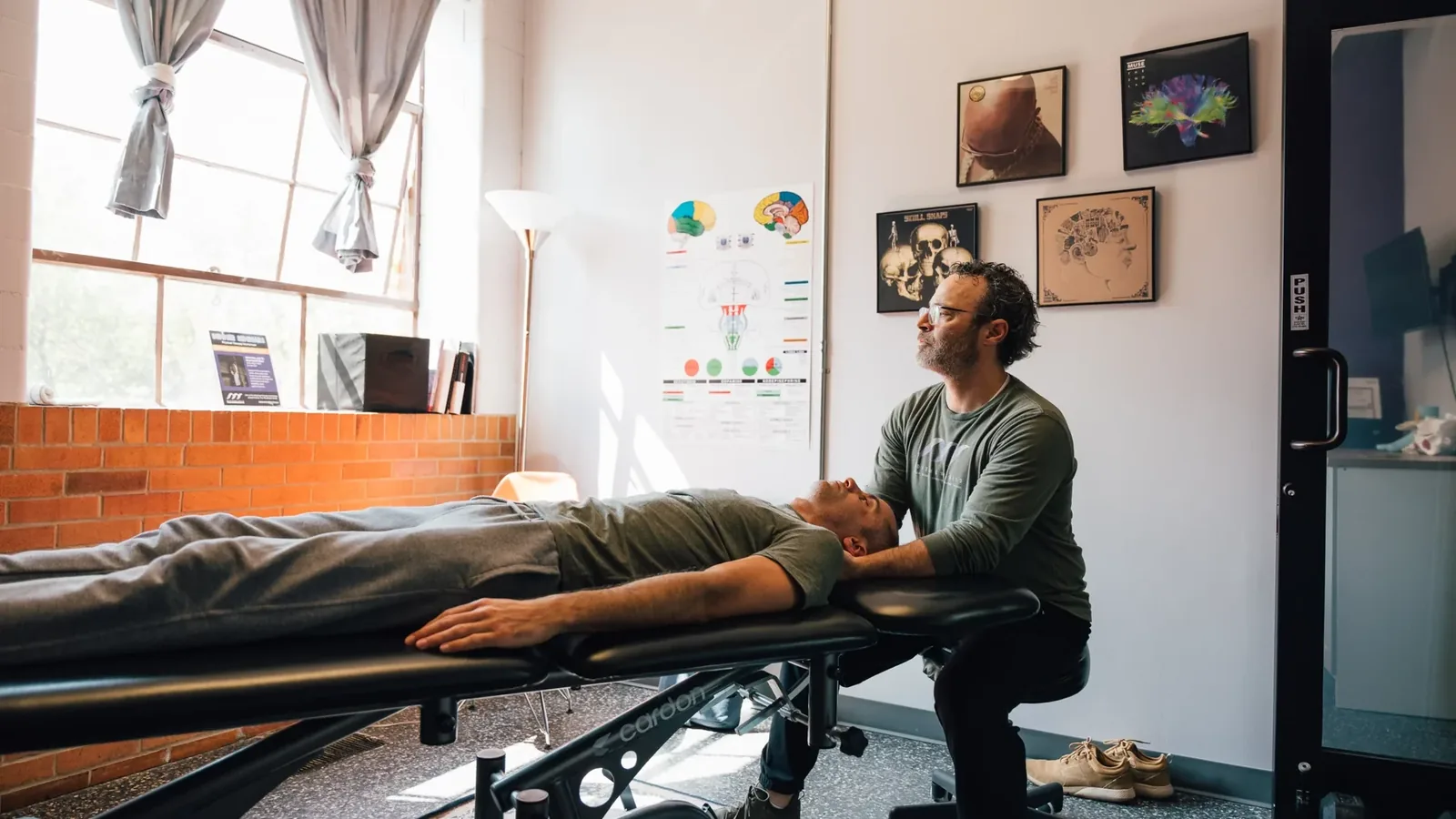
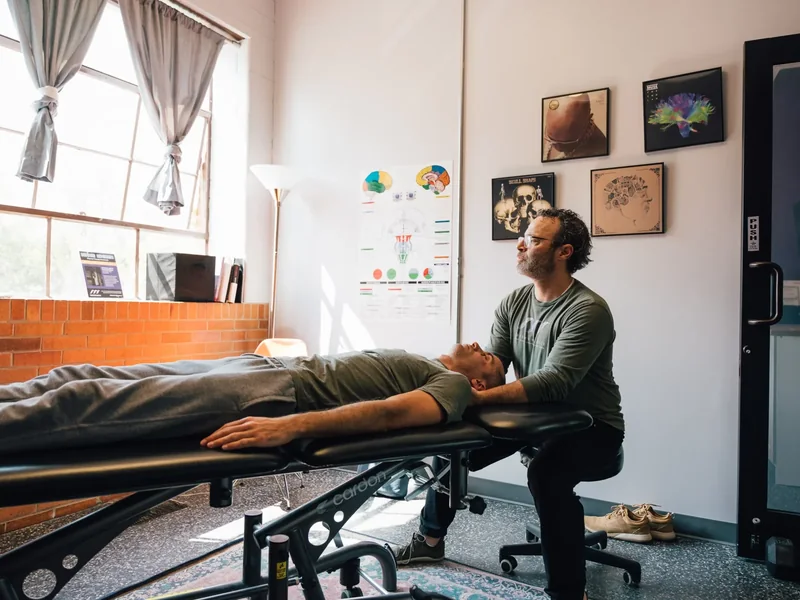
We assess the neck, the mid-back and the shoulder girdle together, because the cervical spine rarely fails on its own. Hands-on joint work restores the motion that has gone missing, and most people can feel the difference in how far they turn before they leave the table.
Then we change the input your brain is working from. Dry needling where muscle guarding is holding on, deep neck flexor work so your head has a support system that is not your traps, and mid-back mobility so the neck stops covering for a stiff thorax.
No referral needed in Illinois. In-network with BCBS, PPO and Medicare, and we verify your plan before you start.
Schedule your appointment.
You do not need a referral. Illinois Direct Access lets you see a licensed physical therapist without one, up to 10 visits or 15 business days. We are in-network with BCBS, PPO and Medicare, and we will check your plan before your first visit.
Come in and tell us the whole history, including everything you have already tried and what it did or did not change. We look at how you move, explain what we find in plain language, and build the plan around your life instead of handing you a printed sheet of exercises.
You’re all set.
We’ll reach out within one business day to confirm your appointment. If you need to speak with us sooner, call us directly.