The shoulder is usually where it shows up.
It started as a twinge reaching into the back seat. Now you sleep on one side, you have quietly stopped pressing anything overhead, and the rest you were told to take left it stiffer rather than better. A shoulder that stays sore for months is rarely a story about one torn thing.
It is the most mobile joint you have, and it borrows stability from everywhere: the shoulder blade, the ribs, the mid-back, the neck. When one of those stops contributing, the shoulder covers for it, and your nervous system starts guarding the exact range where it feels least in control. That guarding is protective, and it outlasts the injury.

Where and when it hurts narrows it down fast.
Which movements set it off, where the pain lands and what time of day it is worst tells us a great deal before anyone puts hands on you.
A Painful Arc
A band of pain partway up as you raise the arm, which eases again once you get past it and returns on the way down.
Weakness Overhead
The arm goes up but it will not hold anything up there, and the last stretch of range feels unsupported rather than painful.
Waking You at Night
You wake the moment you roll onto that side, then spend a while hunting for a position that lets you get back to sleep.
Reaching Behind Your Back
Fastening a bra, tucking in a shirt or grabbing a seatbelt catches in a way the other side never does.
Clicking or Catching
A click or a catch through rotation, sometimes painless and sometimes the exact moment the pain shows up.
Shrugging to Lift
Your shoulder hikes toward your ear before the arm moves, a compensation you usually cannot feel until someone points it out.
Treat the shoulder inside the system that runs it.
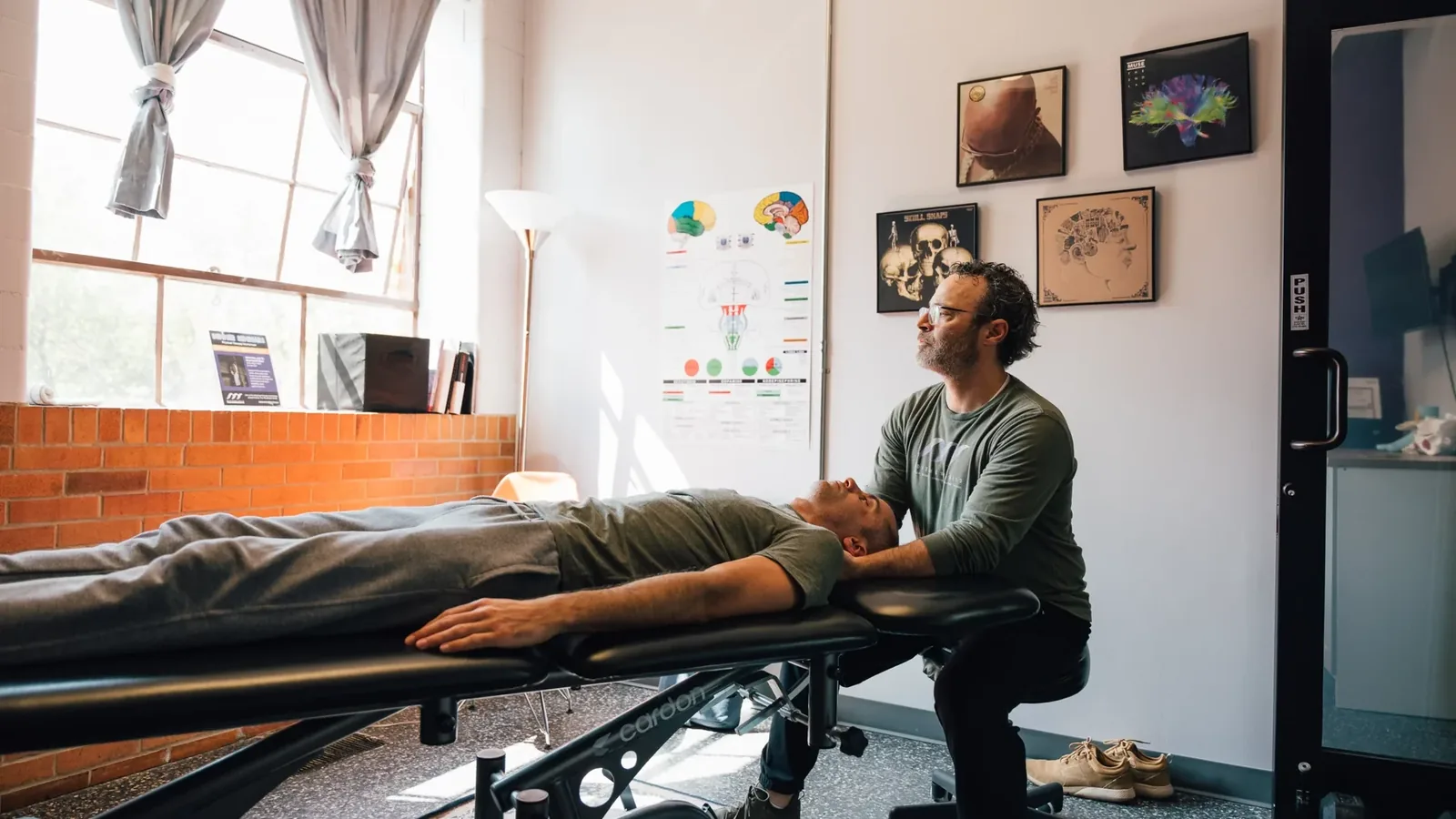
The assessment covers the shoulder, the shoulder blade, the mid-back and the neck, because cervical involvement is common enough that skipping it is how a shoulder gets treated for months without changing. We test which of those actually moves your symptoms, in the room, before we commit to a plan.
Then the work is specific. Manual therapy restores the joint mechanics that went missing. Cuff and scapular work rebuilds control through the range you have been avoiding. Dry needling settles the muscles that have been bracing. Loading comes last, because a shoulder that is only mobile is not yet a shoulder you trust.
No referral needed in Illinois. In-network with BCBS, PPO and Medicare, and we verify your plan before you start.
Schedule your appointment.
You do not need a referral. Illinois Direct Access lets you see a licensed physical therapist without one, up to 10 visits or 15 business days. We are in-network with BCBS, PPO and Medicare, and we will check your plan before your first visit.
Come in and tell us the whole history, including everything you have already tried and what it did or did not change. We look at how you move, explain what we find in plain language, and build the plan around your life instead of handing you a printed sheet of exercises.
You’re all set.
We’ll reach out within one business day to confirm your appointment. If you need to speak with us sooner, call us directly.