

Where you feel it is rarely where it starts.
It shows up while you are driving, sleeping, or reaching into an overhead bin. Sometimes it is pins and needles. Sometimes the arm just feels heavy and slightly not yours. You have been told to stretch your neck, or handed a wrist brace, and neither one touched it.
A nerve running from the neck to the fingertips can be irritated anywhere along that route: at the cervical nerve root, in the narrow space between the collarbone and first rib, or further down at the elbow or wrist. The symptom lands at the far end regardless of where the trouble is.
The details tell us where to look.
Which fingers, what position, what time of day. Those three answers narrow a whole arm down to a short list, and they are the first things we ask you about.
Pins and Needles
Tingling that comes and goes in the hand or forearm, often set off by one specific position rather than by activity.
A Heavy, Tired Arm
The arm fatigues fast overhead, drying hair or reaching into a cupboard, and feels weighted rather than genuinely painful.
Numbness While You Sleep
You wake with a dead arm and have to reposition. Where the numbness sits when you wake is a useful clue.
It Changes With Neck Position
Turning, looking up or side-bending alters the numbness. That usually points at the cervical spine rather than the hand.
Ring and Little Finger Involved
Patterns that reach the ring and little finger point away from the carpal tunnel and toward the elbow or neck.
Grip and Dexterity Fading
Strength or fine control slipping in a hand that does not necessarily hurt. Worth assessing rather than waiting out.
Find the source before treating the symptom.
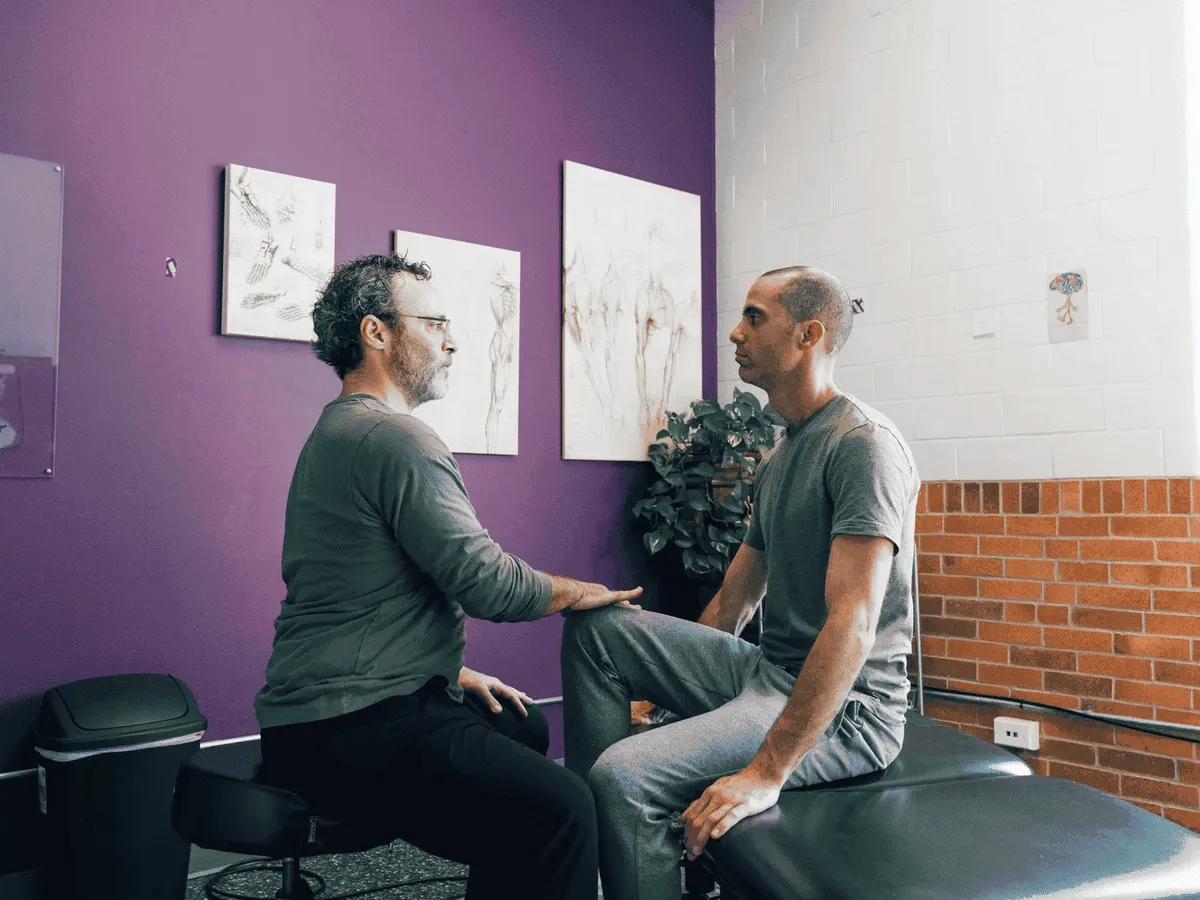
The evaluation is the first half of the treatment. We test the neck, the first rib and collarbone region, the elbow and the wrist, and we watch how you move through all of it. The goal is to reproduce your symptom on purpose so we know what is generating it.
From there the work gets specific: manual therapy where the pathway is restricted, nerve glides to restore how the nerve slides through the tissue around it, and strength work at the shoulder blade and mid-back. This is the brain-based, whole-body argument in its plainest form.
Numbness that is constant, spreading or paired with real weakness should be assessed promptly.
Schedule Your Appointment
Numbness is information, and it is worth knowing what it is telling you. Illinois Direct Access means you can see a licensed physical therapist without a referral, so an answer is not far away.
Your first visit is a full evaluation of the whole pathway from neck to fingertips, and you leave knowing which part of it is producing the symptom.
You’re all set.
We’ll reach out within one business day to confirm your appointment. If you need to speak with us sooner, call us directly.