IASTM Therapy in Chicago

For tissue that has felt thick, restricted and stuck through months of stretching, specialized tools let a clinician work layers that hands alone cannot quite reach.

Schedule Your Appointment

No referral needed in Illinois · In-network with BCBS, PPO and Medicare.

Prefer to call? (312) 489-8579

Specialized tools for tissue your hands cannot read.

Instrument-assisted soft tissue mobilization, or IASTM, uses contoured stainless steel tools to work fascia and soft tissue. The edge of an instrument transmits feedback a fingertip cannot, so a clinician can locate restriction, thickening and old scar more precisely, then treat it with pressure that hands could not sustain.

You may hear it called Graston or scraping. IASTM is the broad category of instrument work used for fascial restriction and chronic tissue dysfunction. ASTYM is a specific protocol inside that same family, aimed narrowly at resorbing scar and regenerating degenerated tendon. Same tool family, different intent.

Contoured tools that read tissue texture more precisely than hands
Treats fascial restriction and chronic tissue dysfunction
Also known as Graston technique or scraping
Broader in scope than the ASTYM protocol
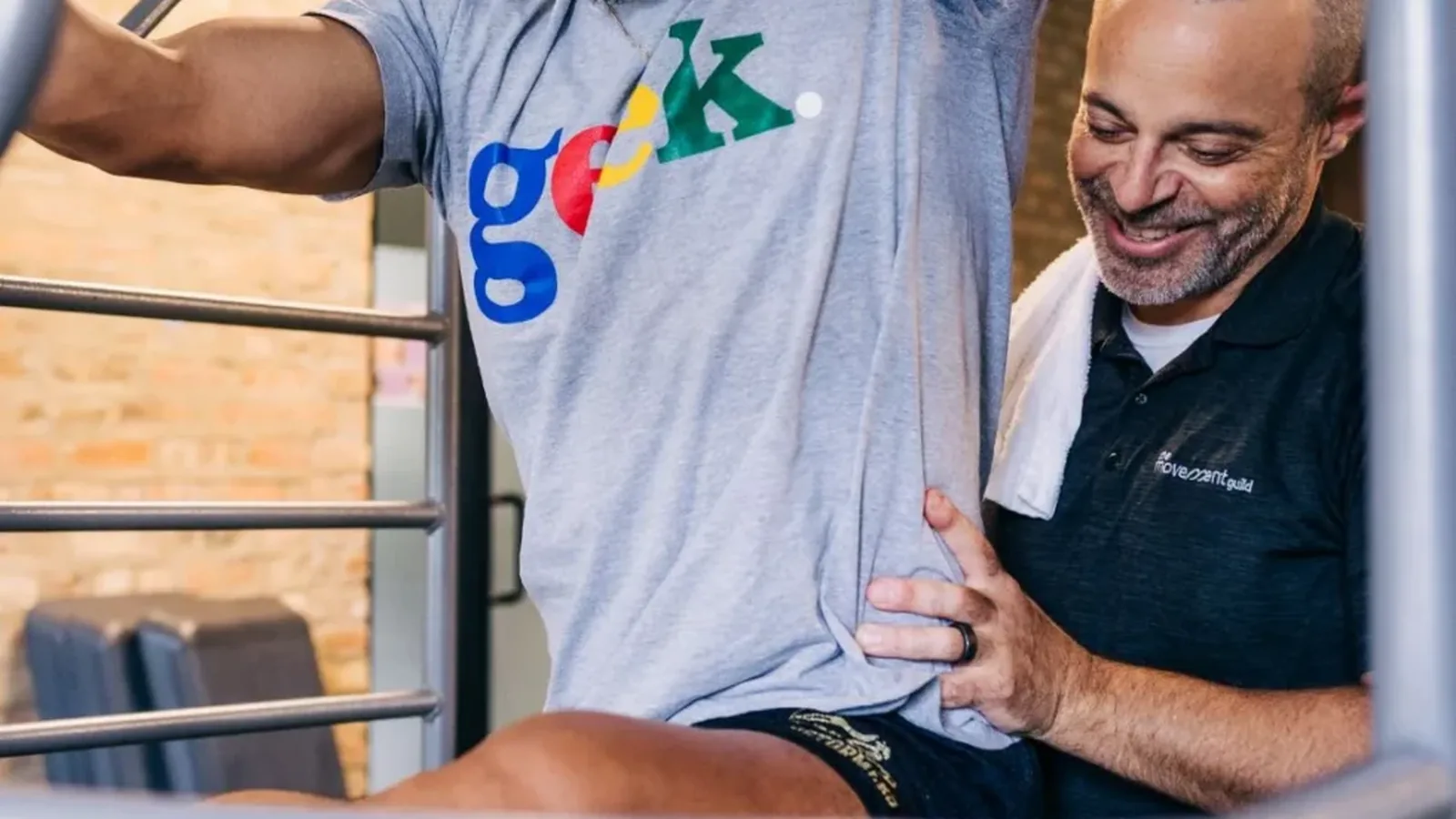
IASTM treatment with a stainless steel soft tissue tool at The Movement Guild

For tissue that feels thick, stuck and unchanging.

You have stretched it, rolled it and had it massaged, and the area still feels dense in the same place. Chronic restriction sits in layers that respond better to a tool edge than to a thumb, especially across broad areas like the calf, the quad or the upper back.

Chronic Calf Tightness
IT Band Restriction
Plantar Fascia Pain
Achilles Stiffness
Tennis and Golfer's Elbow
Forearm and Wrist Tightness
Upper Back Restriction
Neck and Shoulder Tension
Hamstring Scarring
Quad and Hip Flexor Density
Post-Surgical Scar Tissue
Shin Splints

Scanning first, then treating what the tool finds.

Scan the Area

Your clinician glides an instrument across the region at light pressure. Restricted tissue feeds back a distinct gritty or catching sensation through the tool, and that is what maps out the area worth treating.

Work the Restriction

Pressure and angle increase over the spots that flagged. It should register as productive rather than sharp, and pinkness or mild soreness the next day is a normal response, not a setback.

Move It, Then Load It

Freed tissue is taken through range and then loaded before you leave. Tools open a window. Movement is what tells your nervous system to keep the change once you walk out.

Restriction that finally moves after months of stretching.

Most people notice the area feels less dense and travels further in the same visit. Whether it stays that way depends on the exercise attached to it, which is why instrument work here is never the whole plan.

Reduced Fascial Restriction

Dense, adhered layers loosen across broad areas like the calf, quad and upper back where hands struggle to reach every fiber.

Improved End Range

Motion opens at the point where tissue used to stop you, which is usually the exact range that matters for running or lifting.

Softer Scar Tissue

Old surgical and injury scar becomes more pliable, so it stops tethering the tissue around it every time you move.

Clearer Feedback for You

Feeling exactly where the restriction sits makes it much easier to keep working the right area between your visits.

Schedule Your Appointment

Illinois Direct Access means you can see a licensed physical therapist without a doctor's referral. Come in with the area that has felt stuck for months and we will look at why it is not changing.

Your first visit is a full evaluation of how you move, not just a session with a tool. We are in network with BCBS, PPO and Medicare, and we can verify your plan before your appointment.

Prefer to call? (312) 489-8579