Cupping Therapy in Chicago

Suction-based therapy that lifts and separates tissue rather than compressing it, reaching restrictions in fascia and muscle that pressure techniques cannot access.

Schedule Your Appointment

No referral needed in Illinois · In-network with BCBS, PPO and Medicare.

Prefer to call? (312) 489-8579

Decompression, not compression.

Every other hands-on tool pushes into tissue. Cupping pulls it up. Suction lifts the superficial layers away from what sits underneath, creating space where a hand can only create pressure. That is why it reaches restrictions massage and manual work sometimes slide right over.

Used clinically it goes by another name, myofascial decompression: cups placed from an assessment rather than from tradition. They can sit still over one stubborn restriction, or glide along a fascial line and muscle belly when the tight area is broader than a single spot.
Lifts tissue instead of pressing into it
Placed from your assessment, stationary or gliding
Round skin marks are normal and fade on their own
Followed straight away by movement through the new range
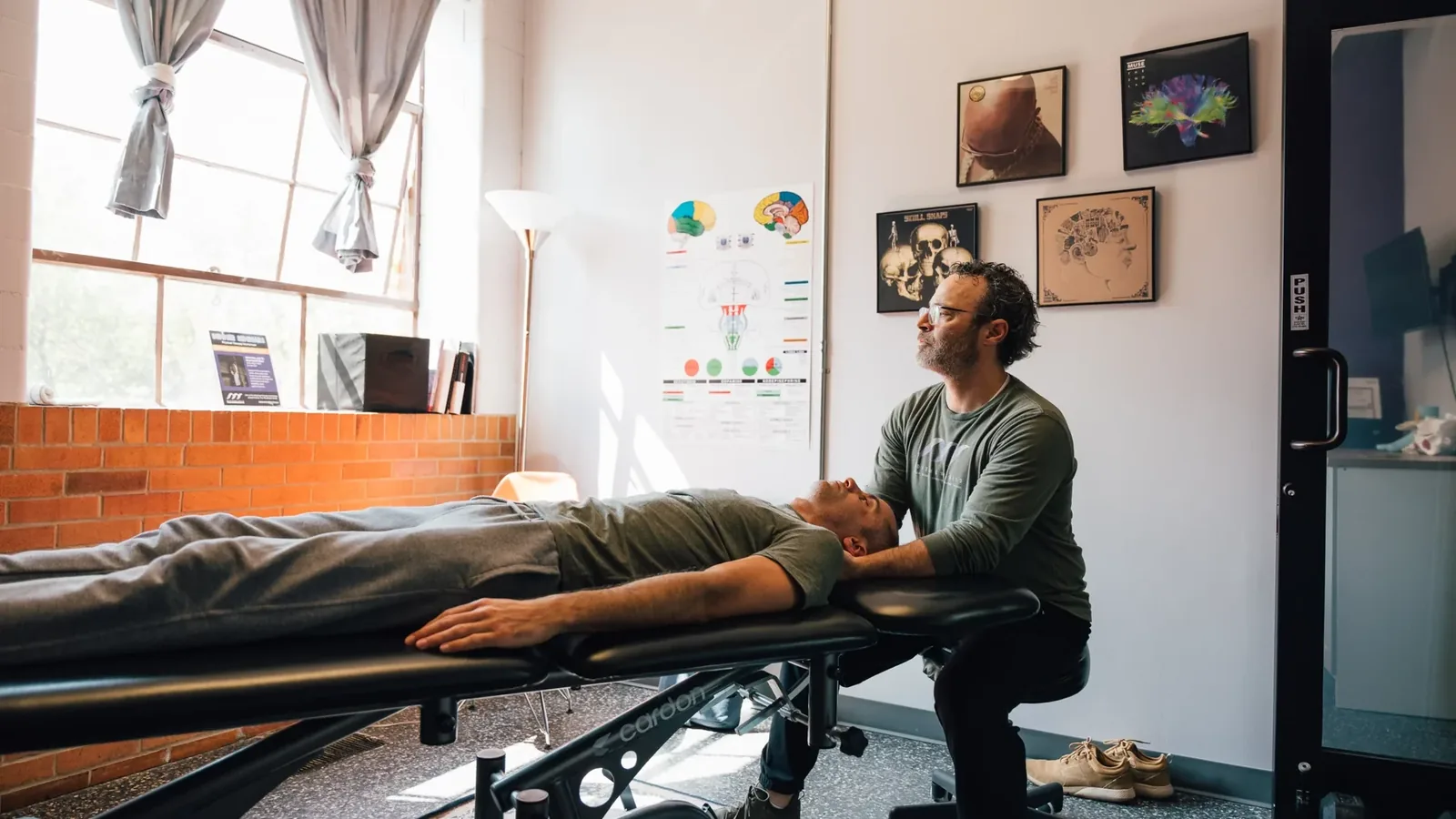
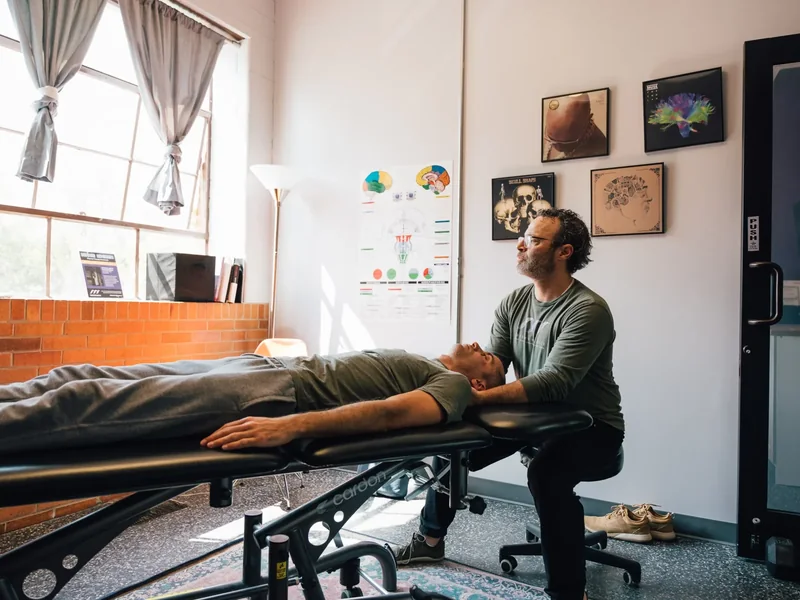
A Movement Guild clinician doing hands-on neck work with a patient in the treatment room

For tightness that keeps coming back.

You stretch it and it is back by the evening. Massage buys you a day. When the restriction lives in fascia rather than in one muscle, pressure tends to slide over the top of it. Decompression gets underneath instead.

Hip Flexor Restrictions
IT Band Tightness
Thoracic Fascial Tightness
Shoulder Mobility Restriction
Calf and Achilles Tightness
Athletic Recovery
Scar Tissue Mobilization
Plantar Fascia Restriction
Cervical Fascial Tightness
Post-Surgical Adhesions
Chronic Muscle Guarding
Thoracolumbar Fascia

Unusual sensation, real release.

Assessment and Placement

Your therapist finds the restricted tissue by palpation and by watching what movement it limits. Cups go over that area. The pull is a strange sensation, clearly different from pressure, and it should not hurt.

Decompression

Cups either stay put over a stubborn spot or glide along the fascial line while the suction holds. Round marks afterward are common. They are not bruises from injury and they fade on their own.

Movement Straight After

Tissue that gets freed and then left alone tends to reorganize the way it was. You move and load the area before you leave, so the change has a reason to stay.

Mobility that pressure could not unlock.

Cupping is one tool, not a treatment plan, and we will tell you when it is not the right one. Where the restriction is genuinely fascial, it does something nothing else in the room does, and you often feel it inside the same session.

Fascial Restrictions Released

Lifting the tissue reaches layers that compression slides across, which is why stubborn areas often respond to it.

Better Tissue Glide

Negative pressure draws fluid back into dry, stuck fascia so the layers can slide on each other again.

Increased Local Circulation

Suction pulls blood flow into an area that has been chronically tight and poorly supplied for a long time.

Scar and Adhesion Mobility

Post-surgical adhesions that limit motion respond well to decompression, especially when it is paired with loaded movement.

Schedule your appointment.

You do not need a referral to start. Illinois Direct Access lets you see a licensed physical therapist for up to 10 visits or 15 business days without one, so nothing has to wait on a doctor's appointment first.

Come in and let us find out where the restriction actually sits. If it is fascial, cupping earns its place in the plan. If it is not, we will use something that fits better. We are in-network with BCBS, PPO and Medicare.

Prefer to call? (312) 489-8579