

The inputs changed, so the plan has to change.
Perimenopause is a physiological transition, not a decline to be managed. Shifting hormones change how tendons tolerate load, how tissue turns over between sessions, how the pelvic floor behaves under pressure and how well you sleep. None of that means the body is failing. It means the conditions your training was built around are different now.
Which is why a program that worked for a decade can suddenly produce a cranky Achilles, a shoulder that will not settle and a neck that aches by Wednesday. The training was not wrong. It is calibrated to a body that has moved on, and it can be recalibrated.
Most of it arrives as a musculoskeletal problem.
These are the perimenopause symptoms that land in a physical therapy clinic rather than a lab. If the neck and shoulder piece is the loudest one, we go into more detail in perimenopause neck and shoulder pain.
New Tendon Irritability
Achilles, gluteal, hamstring or elbow tendons that flare at loads you have handled for years, and take far longer to quiet down afterwards.
Neck and Shoulder Pain
Stiffness through the neck, upper traps and shoulder that shows up without an injury and no longer answers to the stretching that used to work.
Widespread Joint Aches
Morning stiffness through the hands, hips and knees that eases once you move and comes back after a long stretch of sitting.
Pelvic Floor Changes
Leaking urine on a run, a sneeze or a heavy lift. New urgency, a feeling of pelvic heaviness, or sex that has become painful.
Slower Recovery
Soreness that runs into a third day, sessions that stack up instead of clearing, and a warm-up that takes far longer to feel useful.
Lower Load Tolerance
The weight, the mileage or the class intensity you used to hold now tips into a flare, so training gets cut back instead of adjusted.
Treat what is irritated, then recalibrate the training.
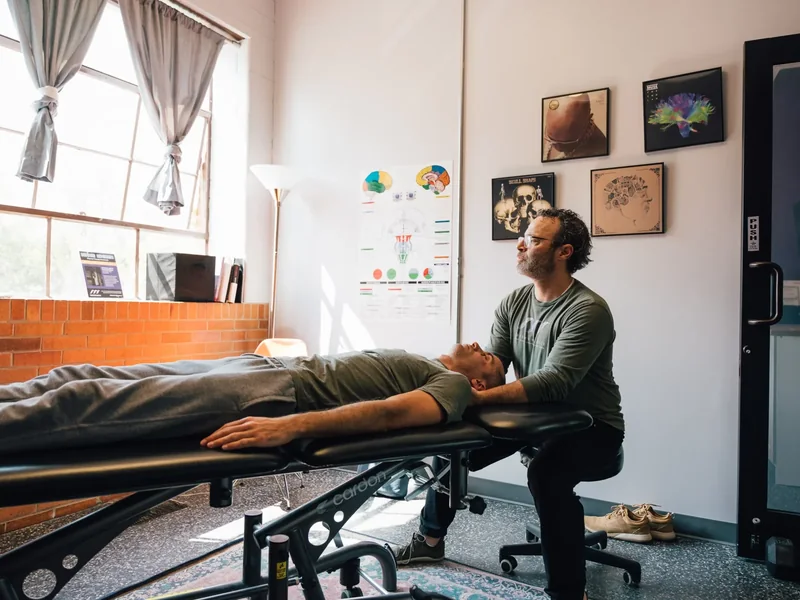
The evaluation covers how you move, what you are currently training, how you are recovering between sessions, and what the pelvic floor is doing under load. Hands-on work settles the tissue that is flared right now, whether that is a neck, a shoulder, a tendon or a hip. That buys you room to work.
The larger piece is load management. Irritable tendons want progressive, tolerable loading rather than rest, and resistance training belongs in the plan rather than beside it. Where pelvic symptoms are part of the picture, Dr. Amelia Fly, PT, DPT holds a Level 1 certification in Pelvic Function and can take that on in the same building.
No referral needed in Illinois. In-network with BCBS, PPO and Medicare, and we verify your plan before you come in.
Schedule your appointment.
You do not need a referral. Illinois Direct Access lets you see a licensed physical therapist without one, up to 10 visits or 15 business days. We are in-network with BCBS, PPO and Medicare, and we check your plan before your first visit.
Bring the whole list, including the symptoms that have already been dismissed as your age. Tell us what you train, what you have had to drop, and what you want to keep doing. We look at how you move and build the plan around that.
You’re all set.
We’ll reach out within one business day to confirm your appointment. If you need to speak with us sooner, call us directly.