

Prolapse is a pressure problem before it is a tissue problem.
Prolapse means one of the pelvic organs, bladder, uterus or rectum, has shifted down into the vaginal wall. What you feel is heaviness, a dragging ache, or a bulge that shows up by late afternoon and after a long day upright. Most people meet it as a diagnosis plus a warning to stop lifting.
The grade of a prolapse and the symptoms it produces are not the same thing. How you manage pressure through your trunk, how the pelvic floor answers a load, and how much capacity you have all change what you feel day to day. Those are the parts we can work on.
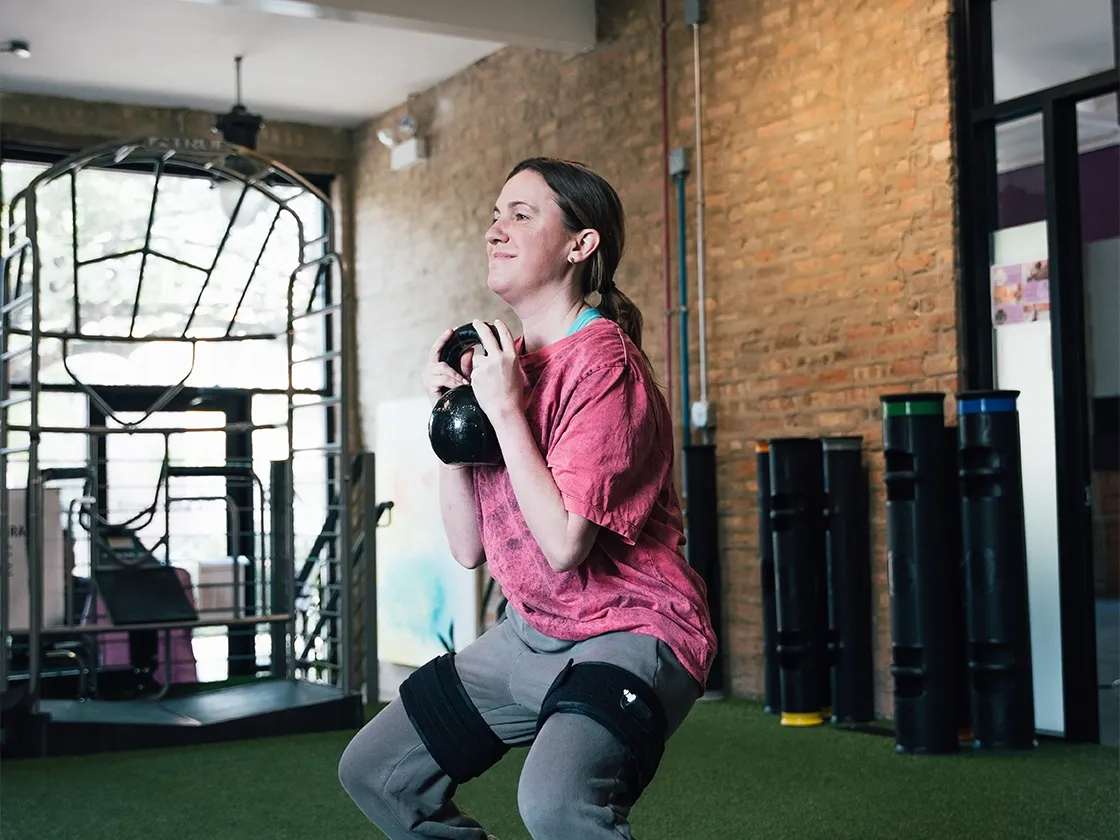
Heaviness that builds as the day goes on.
Prolapse symptoms track with load and with time on your feet, which is the clue that pressure management is involved. Most people notice that pattern long before they notice anything they can see or feel directly.
Heaviness or Dragging
A weighted, pulling feeling low in the pelvis that is mild in the morning and unmistakable by the end of the day.
A Bulge or Pressure
The sense of something sitting low in the vagina, or a bulge you can feel, usually more noticeable after standing or lifting.
Symptoms That Spike With Load
Heaviness that jumps after a heavy carry, a run, a long walk, or a day that kept you upright and moving.
Leaking or Urgency
Bladder symptoms travel with prolapse because both depend on how well the pelvic floor answers a rise in pressure.
Incomplete Emptying
Having to change position or go back a second time because the bladder or bowel does not fully empty first time.
Fear of Lifting Again
Avoiding the gym, the heavy grocery bags and picking up your kids, because nobody ever told you what is actually safe.
Manage the pressure, then earn the load back.
Pressure has to go somewhere. If your breath, ribcage and deep abdominals send it straight down every time you brace, the pelvic floor absorbs the whole thing. So we start there: how you breathe under effort, how you brace, and what the pelvic floor does at the moment the load arrives.
Then we load, deliberately and in steps. Avoiding effort deconditions the exact tissue that supports you. A graded return means finding what you can do without symptoms today and building from there, adjusting as capacity changes. Dr. Amelia Fly, PT, DPT holds a Level 1 certification in Pelvic Function and sees these cases one-on-one.
No referral needed in Illinois. In-network with BCBS, PPO and Medicare, and we will verify your plan before you come in.
Schedule your appointment.
No referral needed. Illinois Direct Access lets you see a licensed physical therapist for up to 10 visits or 15 business days without one, so you do not have to wait for another appointment to get started.
Come with the questions you were told not to bother asking. Whether you can deadlift again, whether it gets worse, what the heaviness actually means. The visit is one-on-one in a private room with a clinician who treats pelvic health.
You’re all set.
We’ll reach out within one business day to confirm your appointment. If you need to speak with us sooner, call us directly.