

Emptying runs on coordination, not on willpower.
Emptying is a two-part job. The bladder or bowel contracts while the pelvic floor relaxes to let it out. When those two stop cooperating you get urgency with very little to show for it, a stream that takes a while to start, or ten minutes on the toilet and the feeling that you are not finished.
Straining makes it worse. Pushing against a pelvic floor that will not release teaches it to grip harder, the bowel gets slower and the bladder gets twitchier. That is a muscle coordination problem, and it responds to muscle coordination work.
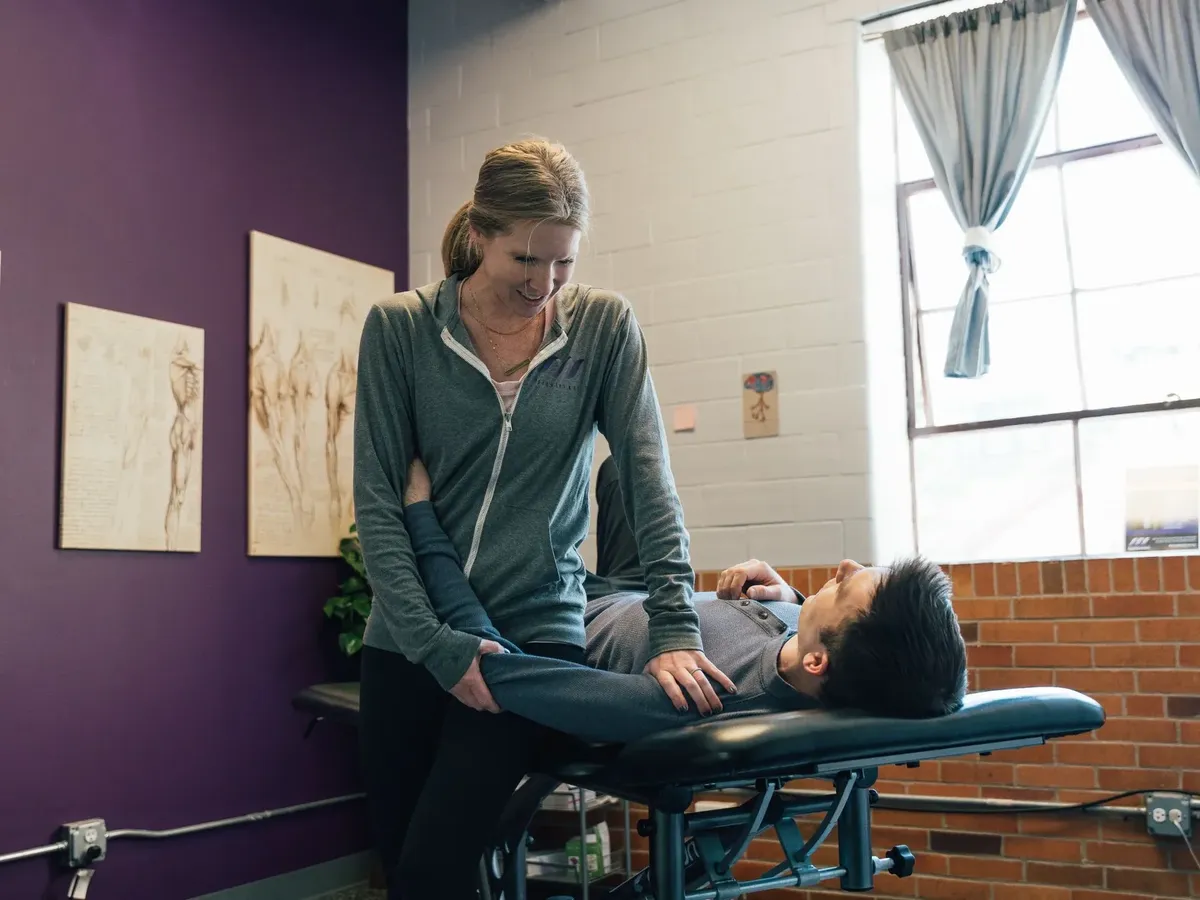
The bathroom stops being a background detail.
Bladder and bowel symptoms rarely arrive one at a time. Most people bring some mix of urgency, frequency, straining and the feeling of not finishing, and the mix is informative. It tells us which muscles are gripping and which ones are not showing up at all.
Urgency Out of Nowhere
A signal that jumps straight to urgent, often triggered by a key in the door, running water or walking into your own house.
Going Too Often
Trips to the bathroom every hour, small amounts each time, and a day quietly organized around where the restrooms are.
Incomplete Emptying
You finish, stand up, and within minutes it feels like you need to go again, because the bladder never actually emptied.
Straining and Constipation
Long sits, hard pushing, and stools that will not pass because the pelvic floor tightens at the moment it should open.
A Slow or Stuttering Stream
The stream takes a moment to start, stops and restarts, or needs a position change and some patience to get going.
Bowel Urgency or Leaking
Sudden urgency to have a bowel movement, trouble holding gas, or staining that turns up after you thought you were done.
Retrain the muscles and the habits together.
Treatment follows what the exam finds, not a generic kegel program. A pelvic floor that cannot relax gets manual work, breathing and downtraining. A floor that cannot hold gets graded strength work. Most people need some of each, in a particular order, and getting the order wrong is why previous attempts stalled.
Around that sits the behavioral half: fluid and fiber patterns, toilet position and mechanics, and bladder retraining that stretches the interval between trips without white-knuckling it. Dr. Amelia Fly, PT, DPT holds a Level 1 certification in Pelvic Function and sees these cases one-on-one in a private room.
No referral needed in Illinois. In-network with BCBS, PPO and Medicare, and we will verify your plan before your first visit.
Schedule your appointment.
No referral needed. Illinois Direct Access lets you see a licensed physical therapist for up to 10 visits or 15 business days without one, so you can start on this now instead of waiting for a referral appointment.
Bring the specifics, including the ones that feel too detailed to say out loud. How often, how urgent, how long you spend on the toilet. Those details are the assessment, and the visit is one-on-one in a private room.
You’re all set.
We’ll reach out within one business day to confirm your appointment. If you need to speak with us sooner, call us directly.