Interview with Dr. Mike Drzewiecki
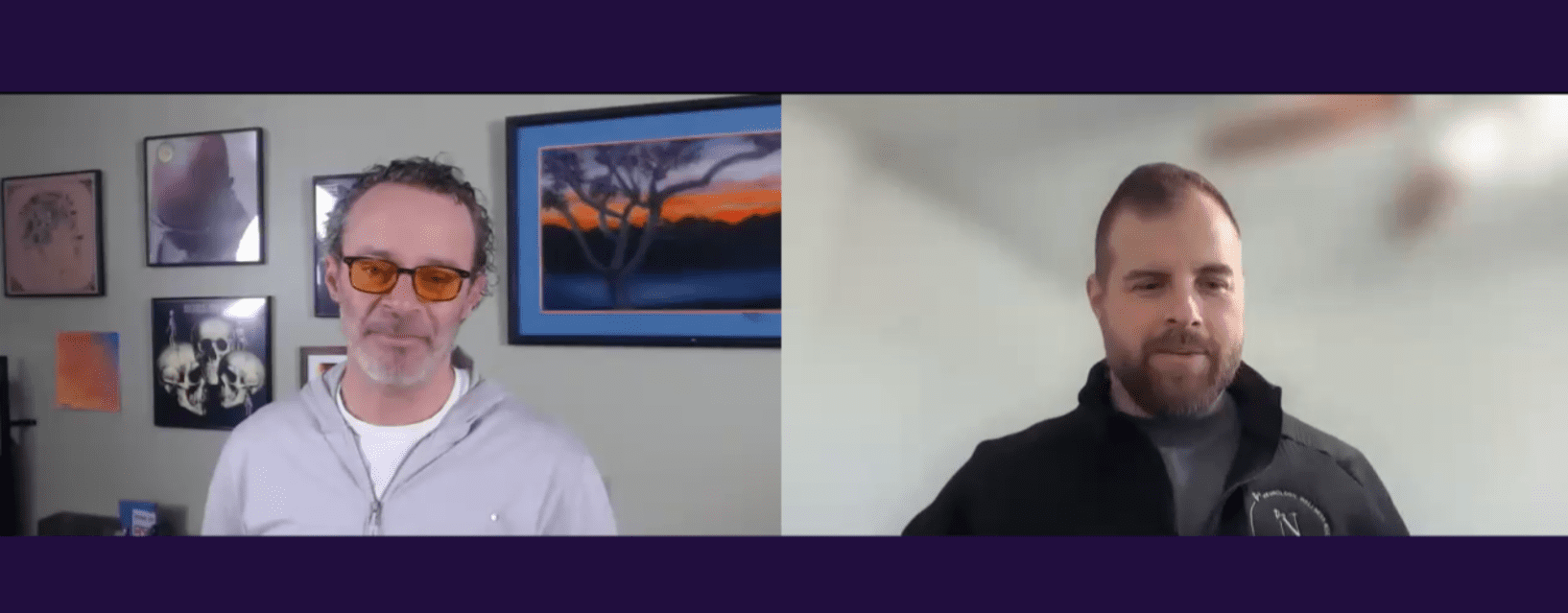
Topic: Brain-Based Rehabilitation & Neurologic Recovery in Chicago
Guest Name: Dr. Mike Drzewiecki
Guest Credentials: Doctor of Chiropractic with advanced training in functional neurology through the Carrick Institute. Co-founder of Neurologic Wellness Institute.
Discussion Details: Dr. Drzewiecki shares his journey from traditional chiropractic training into the world of functional neurology, where he focuses on treating brain injuries, concussions, dizziness, and complex neurological conditions.He explains how his practice differs from conventional models through an in-depth, 3-hour intake process that includes advanced diagnostics like QEEG brain mapping, eye-tracking analysis, balance testing, and autonomic nervous system evaluation. From there, his team builds highly individualized, non-pharmacological treatment plans that integrate visual therapy, vestibular rehab, movement therapy, and neuromodulation techniques.A key part of the conversation centers on their “intensive” care model—leveraging neuroplasticity by delivering frequent, targeted therapy sessions over a short period to accelerate brain adaptation and recovery. He also highlights neurofeedback as a powerful tool for regulating brainwave patterns in patients with symptoms like anxiety, insomnia, and post-concussion syndrome.
Benefit of Watching: If you’ve been dealing with persistent symptoms like dizziness, brain fog, anxiety, or chronic neurological issues—and haven’t found answers—this conversation offers a deeper look into a highly individualized, brain-based approach to care. Dr. Drzewiecki’s model is especially valuable for complex cases, emphasizing precision diagnostics, real-time treatment adjustments, and a collaborative network to ensure patients get the right care at the right time.
Address of Guests Business:
Chicago, IL
160 East Grand Ave.
Suite 200
Chicago, IL 60611
Wood Dale, IL
199 S. Addison Road
Suite 106
Wood Dale, IL 60191
Dr. Michael Drzewiecki: Thank you. Yeah, I appreciate you having me.
Adam Wolf: Uh as you know we’ve talked about the intention of the uh spotlight series we have is to highlight those that the Movement Guild works with uh in terms of referrals and those you know people that we work with in general. You and your practice the Neurologic Wellness Institute uh is uh been an influential part of my practice and my recovery for some of the anxiety and dizziness that I’ve had. But then we also it’s fun to send you patients and you’re also a friend. So, welcome and thanks for being here.
Dr. Michael Drzewiecki: Yeah, absolutely. Yeah. Yeah, it’s uh we’ve definitely had a a a good time over the years in various different aspects of everything. So, yeah, I feel great. You know, you’re not only a colleague, you’re also a friend.
Adam Wolf: So, it’s fun to have you here. Tell us a little bit, Mike, about you and your practice, how you got to be where you’re at, as well as the Neurologic Wellness Institute.
Dr. Michael Drzewiecki: Yeah. Yeah. So, um that and that is that’s our practice. Um we have multiple two two locations in the Chicagoland area. one downtown and then one out in the west suburbs out in Wooddale. Um so those are kind of our two Illinois practices, but uh yeah, it’s um it is primarily a chiropractic practice. So everyone in there are chiropractors, but we focus uh specifically on brain injuries. Uh and those can be uh from severe brain injuries to um TBIs and concussions and things like that to all kinds of other neurological issues. Um, and that’s the the majority of our practice. So, while we all are chiropractors, it is primarily a neuro rehab type of office. So, uh, I kind of got into this, um, I went to chiropractic school thinking I was going to do the sports chiropractic type route, uh, and actually was just right time, right place was introduced to Dr. Dr. Ted Carrick who is really the we’ll say the the godfather of the whole clinical neuroscience or functional neurology world uh and was able to learn directly from him uh on some very you know difficult high level cases uh even as
Adam Wolf: tell a little bit about how you got to teach learn with him it’s a pretty pretty awesome story I think.
Dr. Michael Drzewiecki: Yeah. Yeah. Um it was it was kind of um I I was I was lucky like I said uh he he came onto our campus when I was down at at Life University in in Atlanta and um he started uh a kind of a a practice there or started seeing some patients. He would come in and do almost like a grand rounds type of thing. Uh and I was uh it was actually over a believe it was a Thanksgiving weekend. Um, one of my friends down there said that they needed help seeing um, some patients and he knew I was going to be sticking around because a bunch of other people were were leaving for the um, the holiday. And I said, “Yeah, I’ll help out for that week.” And actually got to work see Dr. Carrick uh in all of his majesty and what he was working with some of these patients and some of them were professional hockey players and you know people that I never thought that I would you know or it was like a maybe some point in my career I would eventually work with these people and then all of a sudden the first week of seeing this I was working with them and it was it was kind of one of those situations where I was like I I don’t know what any of that is. I don’t understand any of it but I need to learn all of it. And so then I dove in head first uh and then started working directly with the Carrick Institute uh and and going through that uh whole learning process which was um which has been fantastic and really is what led to how I can even practice how I do now. Uh it was all all from that.
Adam Wolf: I don’t think the term I mean you and I have had this conversation a lot like the I feel a little bit for me as a physical therapist but certainly you as a chiropractor this the term doesn’t do you justice and the license because people like you know I know plenty of people that just when I tell them you’re a chiropractic neurologist the word chiropractor freaks them out and then there’s others that uh that are upset that the two words are put together. So tell us a little bit about like the experience of what it’s like to see you all. It is a different experience in terms of your intake and how you process. You’re not just cracking joints. In fact, like you know, hardly ever do you really appropriate?
Dr. Michael Drzewiecki: Yeah. Yeah. For sure. So, it it is it’s um while we’re all trained like that, while that’s how I’m trained, uh initially as a chiropractor and everyone else who works in our practice is like that, we we have the ability to do kind of the normal joint manipulation type of stuff and and normal chiropractic stuff, but then beyond that, all of our training really is for um the proper diagnosis and then neuro rehabilitation process. So, when people come into our practice, they um they go through a a long intake process. Actually, our intake is about 3 hours long where they do various diagnostic tests. Um, one of those being a QEEG. So, it looks at different brain wave um patterns that that someone has and and what is the quantity and quality of those brain waves and how they’re interacting with each other. So, more so than just a normal EEG. So they do that and then we put them in different um goggles that actually look at their eye movements and we look really closely at at eye movements and how those correlate to brain health. Uh then we look at a balance test. We put people on a force platform look at how their balance is. We do some cognitive testing and then uh full autonomic testing. So blood pressure on on both sides and in different positions lying down, seated and standing to look at um changes in the the autonomic nervous system. Uh and then we go through a full head to toe exam uh through the lens of how their their brain is working. So it is it is a very thorough intake process. Um and it it’s different than what you might get at other you know for sure a normal chiropractic office. you know, you might get um musculoskeletal type of intake or examination. It’s just looking at how the joints are moving or muscles or, you know, things like that. Um, while we do some of that, that’s just a small piece of it. Uh and then also different than you know a traditional if you went into a traditional neurologist where they’re going to you know they’re they’re going to have their diagnosis which they’re fantastic with uh of course and then typically they send out to you know if somebody needed neuro rehab they would then refer out to let’s say you know someone like you a physical therapist or or someone like that we kind of do it all in house. So we do that initial diagnosis uh and then we build the treatment plan and then I’m actually the one going through the treatment plan along with my uh the therapists that work with us um to actually implement that that treatment and then it it gives us the opportunity to to see the person real time and be dynamic with their case. So um it’s we can we can change things on the fly as we need and as their brain changes and gets better and and different things happen. So that’s kind of the the whole the whole process if you will.
Adam Wolf: Yeah. Well, I mean, I’ve had I’ve observed it and I’ve sent patients for it and I’ve also had it done myself. So, it is, you know, very it’s the most thorough exam I’ve ever had done and I’m fortunate that I, you know, I’ve learned a lot from you and taken care of classes myself. Obviously, my introduction’s been through you. I’m always the one that I feel like is quiet. I don’t use my work email. I use my personal email when I sign up because I’m always nervous that they’re going to call me out on being the physical therapist of the room. But you know, but it’s fun because you you have really I I feel it’s been interesting for me as a clinician to work alongside you and have be able to have so many conversations with you, but you guys are so good at applying the information. I think that’s really what sets you apart apart as you said is like how thorough your intake is, but then the specificity of what you’re doing uh and ability to sort of find things. I’ve always really when I first came to you it and we’ve even discussed this or watched you work. It’s like I was really I was taken back by how simplistic it was like how simple the interventions were and like the things you were looking at but how the depth of thought behind the assessment and what you were doing was really was really so impressive and that also reminded me as I said to you about like applied functional science in the movement world like if you know anatomy you can check a reaction and see if it happens and if it’s not have the ability to to work that in real time. Can you talk a little bit about that maybe and maybe put it in the context of what after you have the assessment and what what is what does it feel like? I guess you know one of the interesting things is a lot of times not everyone I think and please talk about it is you do intensives. So tell us a little bit maybe about like what it feels like after that first session and why the intensive.
Dr. Michael Drzewiecki: Sure. Yeah. Yeah. There’s a couple things there. So it is um so initially we do that full intake thing and then we we build out a plan that is specific to that that individual person. Um so we don’t really have protocols for anything and and like you said some of it it it is very complicated in looking at okay where is the problem in the brain what where are the issues you know that part is the complicated part and then building out a plan that is going to the the treatment plan that’s going to specifically target those areas and help rehab those areas that that is the complicated part and then the therapies can look fairly simplistic I mean some are more complicated than others for sure but um it it’s how you target those through And and like with our our license being chiropractors, it’s non-pharmacological. So no no drugs, no surgery. It’s targeting those areas through physical rehab of some sort. And that really looks like taking the best from the uh visual uh rehabilitation world um like um optometry um and um the vestibular rehab world and the physical therapy world and the chiropractic world. and kind of blending all of those together all at the same time. Um, and really in the same hour. There’s a lot of times that we do some physical movement type of things at the same time as maybe doing some electric stim type of things at the same time as doing very specific eye and head movements. Um, all targeting the the specific areas that we’re trying to rehab. And I think that combination of doing it all together as compared to kind of piecing out which happens a lot of times in in the neuro rehab world um seems to have a a profound impact on how the brain changes and how quickly we can make changes and and some of that that leads into the intensive um that you were talking about or that whole idea. There’s a a couple reasons for it. Sometimes we have people because there’s not a whole lot of us. Uh we have people that fly in from all around the country, all around the world really to to come into our practice. And when somebody comes in like that, from out of town, we see them, it could be up to three three times per day for a whole week. So we kind of have an intensive like that type of thing. But then we also have more for local people um where it’s still pretty intensive and they come in one time a day for about 12 days straight or so. U so it’s like 2 and 1/2 weeks. So they’re they’re coming in very um you know back to back to back. And the reason why we do that is like I said we stack so many therapies together to try to make as big of a change as we can. And using that whole idea of neuroplasticity or or the brain’s ability to learn and and change and adapt. It’s kind of like learning, you know, you’re a musician. It’s like learning an instrument, right? If you if you want to learn as quickly as you can to change your brain and learn how to play the guitar, if you do it once a week, you know, 1 hour once a week, it’s going to take your brain way longer to learn how to to play the guitar. Whereas, if you do it 1 hour a day every single day for 12 days in a row, you’re going to be picking up on things way faster. Um, and it’s the same thing for when you’re retraining the brain for anything. if that’s because somebody has a dizziness syndrome or they have a concussion that they’re trying to get over or a um an autonomic issue, it if you do that training over and over and over again, it changes the brain much faster. And and that’s what we’ve seen, you know, that’s kind of the theory behind it, of course, that neuroplasticity theory, but then also we’ve seen it in practice and that’s why we that’s that’s why we practice that way. Um and it it makes a significant impact on people.
Adam Wolf: Tell a little bit about the QEEG. I think that’s one of the really fascinating pieces about it if you would like how what’s the role my impression is that you know sometimes the brain or people when they’re not able to make changes I I equate it to like long-term anxiety type patients or patients that are like have a lot of fear around their pain which is where a lot of my learning is right now but uh you know can you maybe talk about that type of patient who has you know the findings around their QEEG in terms of imbalances and what you might do about it in those situations.
Dr. Michael Drzewiecki: Yeah. Yeah. Yeah. So, one of those tests uh that that QEEG when when people come in, everyone gets it and it really there’s different brain wave patterns that we have or there’s different brain waves that we have and some are more active when we are sleeping let’s say and others are more active when we’re just awake but calm and then other ones um let’s say like you know u beta and high beta might be really active when we’re in a high thinking mode. Okay. So like somebody who’s taking a test or or having even an in-depth conversation like this, you we would expect that kind of our higher activity brain waves are going to be more active. So we we look at those in a control setting and see if someone is just sitting there, you know, looking at kind of a blank wall, what are their brain wave um patterns at that point? And some people we see where they have, let’s say, for example, someone is, you know, I’m sure some people can understand the whole like wired and tired thing where they’re they feel like, man, I’m fatigued all the time. I’m exhausted. Maybe it was because they had a head injury or life, whatever it is that’s caused this, but they feel like, I’m fatigued. I’m exhausted all the time. I could fall asleep, but then I try to fall asleep and my mind is just racing and racing, racing, and I can’t actually fall asleep. So, I’m I’m wired and tired. And then we do that QEEG and we see that they have maybe elevated delta which is your more of your sleeping type of brain wave. And they also have elevated high beta which is that high thinking brain wave. So they’re in that tired and wired state all at the same time. Uh and so then we would do um neurofeedback. Uh Dr. Christie is our um director of neurofeedback and she sets up same thing. We we don’t have protocols for that. she sets up a specific program that is um it’s specific to that person, but it says, “Okay, how can we train down those specific brain waves that are maybe overactive or train up brain waves that are underactive?” and doing that through a neurofeedback process where people sit and look at a TV screen and they’re watching Netflix or something and the the EEG cap is is connected to their head and it’s it’s registering all of those brain wave patterns and then they’re watching that TV show and as their brain waves fall into the abnormal pattern then the screen starts to dim out and the sound goes down and when and then the the um technician can kind of coax the brain wave waves, if you will, back into the correct pattern and the brain has its own feedback system and all of a sudden the screen lights back up and over time the brain goes ah that’s the pattern of brain waves that we should be in. Um because we don’t have a a way in our brain to say decrease delta or increase alpha, you know, we have but we do have these feedback mechanisms where if the brain gets the reward that it is looking for i.e. looking at the the TV show, then the it will learn the proper pattern of the brain waves and then you the same thing intensely encode that over and over and over again to get the proper um pattern set up.
Adam Wolf: Now, if if you’re okay, you have a few minutes. I’m going to go off subject and talk a little bit just in depth because I have you on the phone and my learnings the call but like and it’s not even you know so it’s this gets off the re the spotlight series but it really highlights your knowledge as I’m going to drop some my learnings right now and I’ve been trying to understand more of like people that have chronic pain and the anxiety around it and some of the changes in terms of uh salience and default mode networks and descending inhibition networks and how that salience and des uh salience and default mode networks can sort of run together when they shouldn’t one they one should flip off when the other’s on from my understanding at a basic level is this the type of situation when when this type of thing happens are we also going to see changes in some of these brain waves or are they different are you thinking differently is it kind depend on the person or
Dr. Michael Drzewiecki: I I I think it probably would depend on the person but I I think there is is an overlap there right and and we see um you know changes in the default um mode uh network and um abnormal patterns going on in that network. Um, abnormal patterns going on in the salience network and then abnormal patterns in the the brain wave activity. I think those are probably all, you know, how how directly correlated there they are. Uh, I’m not sure. Uh, and it is different. You know, every case is different with everybody. I mean, we we see that all the time. There’s so many people that we have come in that, you know, they might have come in with anxiety. Uh, let’s say they come in with anxiety and insomnia. And those are two things that a QEEG typically will pick up because of abnormal brain wave patterns. And then neurofeedback can be very good with. And then we go through the full exam. We go through the QEEG and we find out that it’s that insomnia and anxiety is coming from somewhere else in their physiology and not actually brain wave patterns where a lot of people that does fit that. So I I think there’s probably going to be some overlap in all of those networks. Um, but it’s different and that’s why we do those tests on everybody uh to to see what what is best for that person when we build a treatment program out I guess
Adam Wolf: and there’s no from my I mean I don’t know I don’t think there’s really a way to even assess the salience versus default mode network it’s more conceptual anyway right so for sure you can assess the in your experience just clinically if you can sort out the brain waves do you find that the other pieces often res resolve itself so theoretically you could say okay there’s more balance
Dr. Michael Drzewiecki: Sure. I guess it’s like individual to individual, but there’s times where it probably works and pro times that it doesn’t work. For sure. And and that all comes into all the other things that are at play too, right? So when we look at abnormal eye movements and we look at, you know, someone’s in a pain situation and and where that pain is coming from, is it central pain? Is it peripheral pain? Uh and what role that has on the salience network? And if you if you correct all of those things um then obviously it changes that that default mode too and and how the brain’s um you know and that even gets into like the psychology of things too like how the brain is perceiving itself and its environment and um how it handles stress loads and and all of that. Yeah. It’s it’s such a um the brain is such a crazy thing and we we think we know things about it and then you know the the just like anything right the deeper you get into it the more you realize that you don’t know anything about it you know obviously you know some things and then you realize like gosh there’s so much in there that we don’t don’t know about um or even have a hard time testing I mean there’s so much stuff that is there’s so much stuff that goes on in the brain that we know happens and and even in research we know happens and stuff but connecting those dots even get difficult sometimes of of what is consciousness and perception of reality and all of that. It’s
Adam Wolf: Yeah, it’s fascinating. Yeah. And then Yeah. I mean, and then to be able to measure it or even try to attempt to measure it, you’re like isolating out all the other parts of the variables. So now it’s a disintegrated system that you’re looking at to try to assess and trying to look at and integrate everything. It becomes interesting to think about.
Dr. Michael Drzewiecki: It absolutely does and that’s why I don’t have any boring days at work.
Adam Wolf: What are some always always something you’re the guy that I send to you’re one of like a short list of people that I’ll send to you know it has to be the right type of person that is wants to come and make the effort for such an intensive but like you are often my stop for the tough patients I see feel like if I if I I have tend to be and truly I think because I’ve studied with you and through the Carrick Institute and just understanding trying to apply some what just apply a brain based I I don’t even know what to call it at this point, but just that like applied neural lens, you know, if I say to people all the time like, I have the $1,600 goggles, but I’m going to send you to the guys that have the $75,000 goggles and just are able to get so much more gran whether that’s really how much they cost, I don’t know, but you know, just able to get more granular and part of the reason that I have you guys are just so good at it. It’s a pleasure to be able to send to, you know, you your your business and, you know, most times I say anyone in the business is good, you know, uh, understanding owning a business, but there are times where I’m like, go see Mike. So,
Dr. Michael Drzewiecki: yeah. Well, I appreciate that and and yeah, it is that’s um it’s not uncommon. We we do tend to take that’s the the vast majority of our patients that we see are people who have, you know, whether that they have been referred in by somebody else like yourself and you’re kind of like, hey, this is as far as I can get this person. And then and then they come and see us or or it’s nice when that happens because at least there’s a directive for the patient of like, hey, go see this person or go see me, whoever it is. That’s great. But we see so many people too where they have just bounced around from place to place to place and and you know they don’t fit a perfect box or they’re or they’re too complicated with whatever they have going on and eventually they come see us but they’ve seen 15 to 30 other people before they get in to see us and and that happens all the time and that’s that’s a large percentage of the people that we see for sure.
Adam Wolf: So well I think it says a lot about you and your your business that they so many people are doing that so and I’ll testify to that as well. So what else do you want us to know about your business Mike?
Dr. Michael Drzewiecki: Oh, that’s that’s the I would say that’s the majority of it. Um, yeah, it is it is a unique um practice for sure. It’s it’s um yeah, I I kind of went through all that, but it’s it’s fun. You’ll see the the biggest thing is that just the the changes that you see and there’s patients that because we see people so frequently. Um you know, there’s a lot of times that people are in there and they’re seeing other patients all at the same time and we have we see such a wide demographic of patients. We might have some that are, you know, um everything from um oh gosh, you know, we have like somebody who’s had a stroke, an older person who’s had a stroke, all the way down to young kids who have autism, for example. Uh and then at the same time in the office, we might have a uh professional athlete, a hockey player or UFC fighter or somebody working on performance enhancement stuff kind of all at the same time. And and it’s really
Adam Wolf: business owner that has a little bit of dizziness because he’s too stressed out about working and running his business or that too.
Dr. Michael Drzewiecki: That too, right? and yeah, and you’ve been a part of it. So, you you kind of see the you you’ve been in there, you’ve seen some of the people that that are in the practice and and then it’s cool when you see everyone is kind of getting better uh with each other and and then all of a sudden they’re building relationships. So, the patients are building relationships cuz they happen to talk in the waiting room and they see each other getting better and stuff too. It’s it’s all pretty cool. I’d say um I I think I we’re very fortunate. Um I can say that I feel very fortunate with all of the the people that I work with, all the the doctors and the staff and all that. just everyone seems to really enjoy what they do and I think that that directly leads to um amazing um outcomes for patients as well. I I think it’s all part of the the whole healing process.
Adam Wolf: Yeah, I agree you guys. Everyone is great there and it’s uh it’s fun to watch you guys. Uh and then the other thing and then we’ll kind of wrap up here. I mean, I also appreciate I I also think we do a good job of this is like when we’re not able to help people, you know, cuz there’s times even I referred you somebody not too long ago uh and you said I don’t you know I think they ended up you ended up not I think they’re going to come to see you for the QEEG now but they there wasn’t much for you to do after. So you’re also really good at being like I don’t think this is the right place for you.
Dr. Michael Drzewiecki: For sure. And that happens from time to time too.
Adam Wolf: And then also having the people that you’re going to refer to and because there is it is a group and it is like you can’t handle everything. So you you also have a good network of people
Dr. Michael Drzewiecki: without a doubt. There there are definitely cases, you know, and and that person specifically. Um yeah, we went through it and and that’s a good thing, right? Like there’s times that we see people and you say, “Hey, you know, we can say that this is good, this is good, this is good, all these things are good and there’s actually one thing that’s just a little bit off, but that’s maybe causing all of your symptoms.” And this person in particular is like, “Now you go work, you know, you can work on this stuff at home.” Um that was that scenario. There’s other people that Yeah, I tell everybody that when they come in. My job is to try to put these pieces of the puzzle together and see make sure that it makes sense in my head. And if it does, then that’s better for you. And and sometimes we put the pieces of puzzle together and it’s just not quite fitting or it’s not something that is in our wheelhouse or we find that there’s something else that’s going on. Let’s say there’s uh a chronic infection, somebody has Lyme disease or they have a mold toxicity or they have something like that and that’s actually the primary driver. Um then yeah, we absolutely refer out uh and we have a very good network of functional medicine practitioners and um optometrists that we work with and um you know psychologists or therapists. So whichever way if we need to if if the patient isn’t the right fit for us or we’re not the right fit for them, then we direct them um to where they need to go the same way that that you know you do sometimes when you send people to us. Um so that’s absolutely um that’s a strong point for all of us too. We we are all I I think we all of our docs in our office take pride in that part where it’s you know we’re we will absolutely on day one tell you if we think that we can help you and the only way we’ll tell you that is if we have a a very strong um thought process behind it. You know, we’re not going to guess and throw darts at the wall and say I hope that this works or do this protocol and we’ll see what happens. It’s it’s we should have a really strong idea if we think we’re going to help somebody. Um, but then also if we don’t think that we can help, then we’re very straightforward and honest with people on day one with that too and and then try to point them in a different direction um that where they might find help.
Adam Wolf: What’s your website? Where can we find you? All that stuff.
Dr. Michael Drzewiecki: Yeah, the the neurologicwellnessinstitute.com. Uh, and then we have a Facebook page, same thing. Instagram, TikTok now, I think even. Um, I know all that stuff. Um but yeah, and then um yeah, all all of our information as far as like booking and um phone numbers and all that stuff is all through our website and and there’s a lot more information on our website too that kind of talks about our thought process behind things and and you can get a really good idea um through the site too.
Adam Wolf: Appreciate your time today, doctor.
Dr. Michael Drzewiecki: Yeah, my pleasure. Thank you. I appreciate it.