Interview with Dr. Lenny Cohen
Guest Name: Dr. Lenny Cohen
Guest Credentials: Board-certified neurologist with 18+ years of clinical experience, Founder of CNS Center.
Discussion Details: Dr. Cohen shares his journey as an independent neurologist in Chicago and how his curiosity-driven approach allows him to go beyond traditional care models. He discusses incorporating innovative treatments like hyperbaric oxygen therapy, neuromodulation, and IV infusions for conditions ranging from long COVID to stroke recovery and neurodegenerative diseases.
He also highlights his philosophy of reducing bureaucracy in medicine, allowing faster adoption of promising therapies, and emphasizes collaboration with other providers to ensure patients receive the most appropriate care. Additionally, he explores the future of neurology through biomarkers, EEG-based diagnostics, and data-driven treatment approaches aimed at early detection and improved outcomes.
Benefit of Watching: If you or someone you know is navigating neurological conditions, chronic pain, or cognitive concerns, this conversation offers insight into a more personalized, forward-thinking approach to care. Dr. Cohen’s model emphasizes accessibility, innovation, and strong provider relationships—helping patients get answers faster and feel supported throughout their journey.
Address of Guests Business:
Chicago
2219 W Belmont Ave,
Chicago, IL 60618
River Forest
7319 W North Avenue,
River Forest, IL 60305
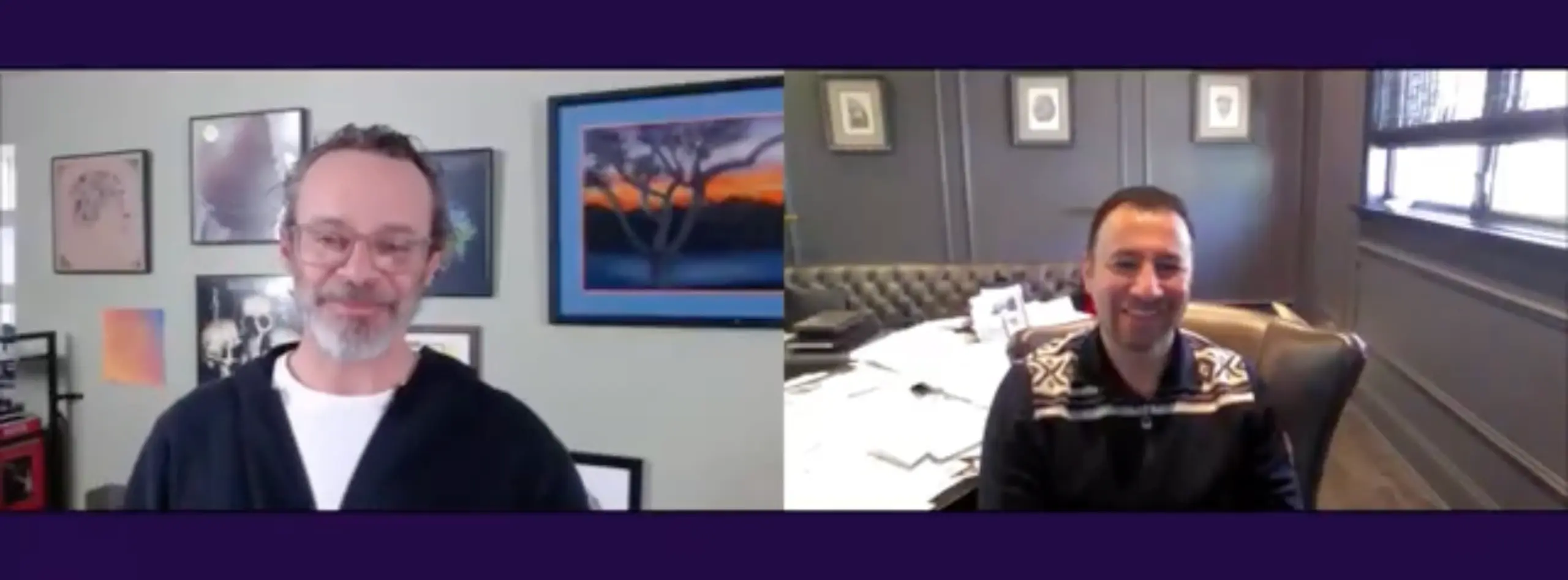
Dr. Lenny Cohen: Thank you, Adam. It’s very good to be on with you.
Adam Wolf: Thank you. And uh as you know, this is uh trying to highlight you as a doctor in our community for the Movement Guild. We’re trying to highlight those we work with and you’ve done a great job. I think you’re a fantastic neurologist. We’ve uh referred referred both directions. We’ve referred to you and you’ve referred to us. So, I just wanted to have you on and uh why don’t we start if you don’t mind just tell us a little bit about you and your practice.
Dr. Lenny Cohen: Yeah, absolutely. Thank you, Adam. Once again, thank you for being a good colleague and sending us patients and actually taking care of our patients. That’s even more important. Um, so just a little bit about myself. Um I’m a solo neurologist working in Chicago for last 18 years and enjoying the beautiful thing of neurological curiosity that allow me to build out my practice on different things that can or cannot be offered in a bigger practices and the reason for that is we do not have bureaucracy. It’s pretty much if I find something curious or something that research show very promising we will do that. So besides the traditional neurology as you know that offers evaluation and taking care of patient from different points of view, we offer some other things. One of them was hyperbaric medicine that I looked at about 10 years ago and we became the first standalone center in Chicago which is a medical facility and we using hospital-grade hyperbaric chambers and the reason for that we start to use um unfortunately due to my personal history of my father getting early onset dementia and I was looking at other things outside of western medicine that might be helpful and that’s what kind of pushed me over to this more of the um investigational approach in neurology. So we did hyperbaric before it became a research published articles for long covid and we offer it for patients with long covid and we were very successful with that. So moving forward u couple years ago I started to look in a whole thing of neurom modulation and I think that we both agree that this is a future of the medicine as we kind of hitting the roadblock with pharmaceuticals when they cannot really do much anymore. We start to look at alternatives and neurom modulation at least in neurology world is such alternative and um neurom modulation started with TMS or transcranial magnetic stimulation that probably been on the market for about 20 years. It’s been finally FDA approved about 10 years ago for depression and obsessive compulsive disorder. But we use it for way more than that. If you think about this, if you stimulate specific area of the brain, you can make that area do something that you want. So for example, if I stimulate speech center, I can allow people post stroke who unable to talk to recover their speech faster than those who do not do something like this. If I stimulate motor cortex, I allow them in conjunction with physical therapy, it will allow them to recover faster etc etc etc. So this is very very interesting research-based approach which we offer to our patients and then most recently we went from central neurom modulation to peripheral neurom modulation with something called MPNS or magnetic peripheral nerve stimulator. And what that does it’s stimulating peripheral nervous system for patients with chronic pain or neuropathy and it has it’s actually was a day approved but it has very very promising research for patients not just with diabetic neuropathies but with different type of pain and here we are in 2026 trying to offer our patients as much as we can and as you probably remember we’re building the first brain center in Chicago where we will combine all these modalities including MRI try and and including hopefully psychotherapy and psychiatry support to our patients under one umbrella of CNS brain center.
Adam Wolf: That’s amazing. Tell us a little bit about the patient you work with because I think you there is a wide variety of people that you tend to see.
Dr. Lenny Cohen: There is and you know that once again it’s going back to curiosity. I do not think that when you go to medical school that you know exactly what type of patient you’re going to be excited about and frankly even if you are excited about one type of patient that might change over time. So, for example, I finished my residency and I was neuromuscular guy and I do a lot of EMGs, but over time it’s getting repetitive and it’s getting boring and you know, it’s not really mentally stimulating. It’s like when you know everything what you need to know. So, I start to look outside of that and this is how I came um about neuroinflammation and neurom modulation and this is how I approach my patients. But um to tell you what type of patient, you’re right. Pretty much almost anything that is um related to neurological pathology, we can try to help our patients with ranging from headaches to stroke recovery, multiple sclerosis to Parkinson’s disease. And if we are not successful, which does happen, not quite quite often, but sometimes it does happen, we can always send patients to either Northwestern or Rush University where I have uh colleagues who can help patients to if they need more of the multi-disciplinary approach.
Adam Wolf: That’s great. What else do you want us to know about your your practice? You just opened up uh you you opened up a new you’ve been in Oak Park, River Forest as well as Chicago, but you’ve opened up a new location there. You want to tell us a little bit about that?
Dr. Lenny Cohen: Sure. So, I’ve been in Oak Park. It’s actually was my first place when I landed in Chicago and I’ve been there since 2007 and you know it’s like like everything else it came to the end with uh ending our lease there and we were looking for a place and so we simply moved from Oak Park to River Forest. It’s a new place for us. It’s very exciting. Um I never knew that river forest is such a beautiful area to be honest. But um it allows us to be more the part of the community instead of being inside the hospital where we do not really see our patients um as much. We see them as patients but not really as community. Um and over there we offer our uh neurological services as well as TMS or transcranial magnetic stimulation. We have IV infusion suite which I don’t think that I mentioned so far but we do that for patients with multiple sclerosis as well as patients with dementia for anti amalloid medications and we recently as you probably know we open um physical therapy where we probably do not offer the same services that you do but we try to help our patients those who do not want to travel outside of that geographical area.
Adam Wolf: No, I get it. That’s great. It’s uh your space is beautiful both of them. Uh I’ve been to both. And uh what else? What else do you want us to know about your practice, doctor?
Dr. Lenny Cohen: One of open for business.
Adam Wolf: So, we One of the things I appreciate about you, I feel like we both like to learn and are continuing to kind of fill in our perceived gaps and our knowledge bases. And so, like in amongst, you know, I’ve enjoyed my times talking to you and you you do also think out of the box um for those listening. So, what are some things that you’re interested in more these days? I know you said dementia. you you’ve talked about a number of different
Dr. Lenny Cohen: So, um I as we both growing older, Adam, I’ll be honest with you, I probably have somewhat vested interest in brain longevity, especially knowing family history. Um I do not want to be unpleasantly demented as my wife claims that I will be. So, here we are now and um I’m starting to look at biomarkers of how can we identify patients problem before they became problems. So this is one of the biggest holy grail of medicine. How can you identify when patient are more likely to develop problem or not? And lately what we found out the specific type of EEG evaluation can allow us to say if patient have TBI or MTBI or if they prone to have dementia at the time when they develop mild cognitive impairment. This is my I don’t want to say new venture but this is my new excitement. This is something that I want to learn more about. I want to see if we can use this so far research based equipment if we can use it for our patients and learn from our patients uh and what they do or do not have and pretty much we’ll be able to have longitudinal analysis evaluate apples to apples to see how do they do and also in a way it will allow us to see do they respond favorably to TMS do they respond favorably to hyperbaric medicine this will allow us to truly have some data driven analysis for our patient underlying condition and that’s so important like
Adam Wolf: particularly around neurology. I feel like some of the people that we probably both see have been to so many different people and get so many different ideas about uh you know different opinions from different for physical therapists or doctors or whatnot. So to be everybody has an opinion.
Dr. Lenny Cohen: Yeah, everyone has an opinion and you know for I think being able to anchor to objectivity and try to simplify the story as much as possible I think is really important.
Adam Wolf: No, I’m with you because think about this. Our colleagues at internal medicine, they’ll measure blood pressure, they’ll measure cholesterol, they’ll measure diabetes and they’ll unfortunately that’s what they will keep doing. They’ll measure numbers and they will follow those numbers.
Dr. Lenny Cohen: um we try to find if there’s a number that is measurable for our patients with neurological disorders and can we adjust the therapy based on that number. So stay tuned.
Adam Wolf: Fascinating. Yeah. I mean it’s fun that we’re both sort of thinking about those things. So what else do you want us to know about your practice before we wrap up here doctor?
Dr. Lenny Cohen: Well like once again we are in two different places forest and Chicago. We are open for business. The one thing that we did not talk about that it’s rather sad reality that patients need to wait for months to be seen. I recently had a patient who had to wait for six months to be seen by a specialist out of University of Chicago. And the only reason for that is that those guys are busy. Um our patients being seen within two to four weeks.
Adam Wolf: That’s important. One of the thing Yeah.
Adam Wolf: And like one of the things I like about you and your practice and there’s even been times um where you know I’ve said could you get this person in a little quicker and you’ve done a good job with that and so
Dr. Lenny Cohen: and we will make that happen because uh this very old school medicine when you have the colleagues talking to each other I think that it’s very important unfortunately medicine nowadays is kind of faceless and you know it’s like we hiding behind the electronic medical records and at best maybe there would be a comment in your inbox from your colleague But that’s why I think that we work well together because we can develop personal relationship that we can discuss our patients and try to have a plan how we can help them.
Adam Wolf: I agree and I think you know relating that to as you know I’m in school right now one of the discussions I was having one of the classes we had we we had to do an interview with a chronic person with chronic pain and one of the things that that person with chronic pain that’s been to a lot of people and very educated smart person is the idea he wishes that there was uh a a case manager almost that was a because nobody’s managing that case from that person that’s going from person to person to person that’s part of the dysfunction of our medical system we both find ourselves in and I guess part of the reason we also like working with each other
Dr. Lenny Cohen: So I well yes and it’s like ultimately uh I would like to think that we educate our patients enough that they not going to leave office thinking about that there was some unanswered questions or anything of that sort and even if they do we’ll try to answer it next time and sometimes as you pointed out we constantly learn something and I learn from my patients there’s some things that um I know now that I didn’t know when I graduated from medical school from residency or even five years ago.
Adam Wolf: And just the the idea of the ongoing conversation with the patient and kind of being part of their process as opposed to the
Dr. Lenny Cohen: Absolutely.
Adam Wolf: Well, sir, I appreciate your time today.
Dr. Lenny Cohen: Thank you very much. You’ve got a new website now. It’s What’s your new website?
Dr. Lenny Cohen: Uh, it’s cns-center.com.
Adam Wolf: Excellent. So, go ahead and check out Dr. Cohen. Thank you very much for your time today, sir.
Dr. Lenny Cohen: Adam, thank you for having me. Always a pleasure.