
Interview with Dr. Etan Sugarman
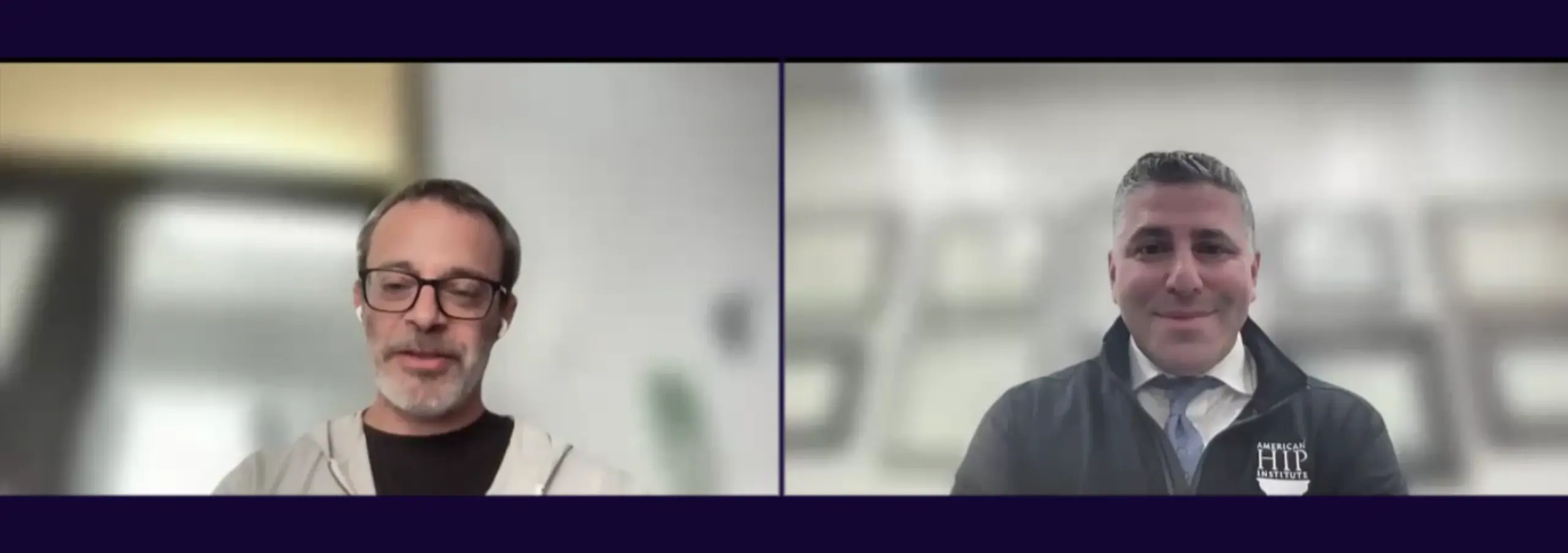
Topic: Understanding Hip Pain & Your Treatment Options
Guest Name: Dr. Etan Sugarman
Guest Credentials: Director of Joint Preservation at American Hip Institute. Orthopedic surgeon specializing in hip preservation, hip arthroscopy, robotic hip replacement, knee preservation, and shoulder surgery.
Discussion Details: Dr. Sugarman explains why hip pain in your 30s and 40s is common — but not normal — and how many issues can be treated, often without surgery. We cover innovation in hip care, when surgery is appropriate, and how partnering with the right PT and surgical team leads to better outcomes.
Benefits of Watching: If you’re dealing with hip or knee pain, this conversation will help you understand your options and remind you that you don’t have to live with ongoing discomfort. The right evaluation can make all the difference.
Address of Guests Business:
999 E Touhy Ave, Ste 450
Des Plaines, IL 60018
Dr. Etan Sugarman: Oh, it’s my pleasure. Thanks for having me.
Adam Wolf: Maybe you could just tell us a little bit about yourself and your practice and go from there.
Dr. Etan Sugarman: Yeah, absolutely. So, uh, as, uh, you mentioned, Adam, I’m, uh, director of joint preservation at the American Hip Institute. We are a group that is primarily dedicated to the treatment and cure of hip problems, uh, almost all ages, 12 up to 120. Uh, and our focus is really three-fold. It’s on the uh clinical treatment of patients who have sometimes very complex hip problems. Uh sometimes very basic hip problems. Uh that’s on the one side. We also have a large uh portion of our practice and thought process is developed towards our American hip institute research foundation uh where we are a very active uh research group looking at outcomes of hip surgeries development uh with an idea towards how do we best help patients? How do we continue to innovate? uh and we also have an innovation arm where a lot of the treatments that uh we have employed and currently do employ have actually been invented at American hip institute over the last 15 years. So uh large focus on uh hip surgery, hip replacements, hip preservation, hip arthoroscopy. myself, I come from a sports medicine background, treating anyone from the weekend warrior, high school athlete up through uh professional athletes. uh take care of uh or I’ve taken care of a lot of professional teams in the past uh across a number of sports and uh so my particular focus is on uh joint preservation of the shoulder, hip and knee uh obviously with a focus on hip but I also do quite a bit of uh complex knee preservation as well as shoulder surgery.
Adam Wolf: What made you decide to become a surgeon?
Dr. Etan Sugarman: Um I don’t think there was much decision. Um, you know, I truthfully I I always love working with my hands. That was kind of the baseline and and then kind of parlayed that in through medicine as a way to be actively involved in the treatment and care of patients. And I think orthopedics in general uh particularly called to me uh my grandfather owned a hardware store. I always loved woodworking growing up. Uh and there’s a lot of relationship to that. But also with uh orthopedics, it’s a quite unique I think field where you have the ability to really make people better uh in relatively short order and it’s um particularly gratifying I think I I think more so than most fields.
Adam Wolf: I agree with you a lot. Uh you you said a little bit you alluded to this but maybe you could talk a little bit Dr. about what makes the American Hip Institute different than some of the other places. I feel like I might be able to answer that even just from my perspective of being a practitioner that’s worked with some of your people, but I’d love to hear your your thought on that.
Dr. Etan Sugarman: Yeah, I I think you know um let me start at the beginning. I I I think hip uh let’s say hip replacement is something that is done frequently by many many people and there’s a lot of innovations that we have done in American Hip Institute. We were among the first if not the first uh first or second in the in the country to do outpatient uh hip replacement, robotic hip replacement, anterior robotic hip replacement very few centers even now are doing. Uh so there’s a lot of innovation on the joint replacement side uh and reconstruction uh hip resurfacing on the hip arthroscopy side which you know you think of more and more we’re recognizing that first of all most people that need hip replacements later in life probably had an underlying hip condition which may have been able to be treated earlier. uh two hip problems in let’s call it young adults is a far more common problem than I think we see in even in our clinic uh and probably if you walk into a random audience there’s going to be a lot of people that have hip problems that don’t recognize that they’re hip problems over the last 20 years as hip arthoroscopy and the understanding of hip pathology in younger people uh has matured we have been at the forefront of treatment of that of treating uh of developing techniques to treat it of evaluating techniques of trying to perfect techniques and really advancing the field. Uh and as a result of that have become a destination worldwide for patients that are seeking treatment for hip problems. uh sometimes as a first uh foray into it and many times unfortunately as second, third or even fourth uh times where they have been treated elsewhere and then have come to us for treatment.
Adam Wolf: What uh what’s the process look like to work with you or your organization director?
Dr. Etan Sugarman: Yeah. Well, you know, we we try to make this as easily accessible to people as possible. As I mentioned, you know, for people that are local, great. uh for even people from not local. Uh a large portion of our patients come from all over the country, all over the world. Uh and so we have concierge teams that really help shepherd people through the process, making sure that if they have information, prior treatments that have already been done that that’s collected in the most efficient way for them. And then when they come in for a visit, uh we really focus on giving them as much time as possible and as much time as they need uh to really go through everything as a comprehensive evaluation. Uh and we have a process that we have developed here at American Hip Institute uh that has steps to help patients understand where they are. Sometimes people come in and everything is done right. they they’ve had treatments, they’ve had imaging, they know what they need and they’re here for surgery. That’s fine. Many times people don’t need surgery, but they need direction or they need further evaluation. And so our job is first to help them understand what the problem is, understand what their options are. If they need injections, further evaluations, whatever the case may be, we can do that. uh partnering with their physical therapists uh to really make sure that they have a comprehensive approach to their treatment plan.
Adam Wolf: I’ve observed you do a really good job of that, you know, uh working and a teaching your patients and educating them on what’s going to happen, but also I was very impressed with a number of my uh patients that I’ve worked with that have come from your uh group have had PT like uh they had PT with you and they got started rather than and I’ve seen uh and then they come to us after a week or two of being with you just for convenience or whatnot. I was very impressed with just the PT that they were getting with from some of the PT that I’ve seen other people that have had hip pain and postsurgery like hip issues uh acutely have have had. So wanted to give you props for that. Keep good job there.
Dr. Etan Sugarman: Thank you very much. I mean listen we we try very hard and we recognize that it’s not convenient for many people to continue to come to us for physical therapy. Obviously, we offer uh physical therapy for those that want, but it’s also important to uh have an ongoing relationship with our physical therapists and other physical therapists around the area, around the state, around the country uh in an effort to really help patients wherever they’re coming from.
Adam Wolf: Dr. I don’t want to take up too much more of your time. Like, uh what is the main thing you’d like to be known for? Uh what are you best at?
Dr. Etan Sugarman: Well, I I would say that there are options for people. Uh and so what am I best at? I love doing preservation surgery uh hip and knee as well as shoulder. Um obviously we specialize in hip arthoroscopy here uh and hip preservation surgery. Um but you know I think a what I see a lot of times is people that are coming in that feel like they have pain and they just have to live with it, right? um or they have dysfunction, they just have to live with it. And that’s really not the case. And I think that there’s a lot of opportunity to help people. And sometimes that’s surgical and sometimes it’s not surgical. And if we can keep people uh healthy and get them better without surgery, I think that’s ideal. And if they need it, then you know, we obviously have solutions for that as well.
Adam Wolf: Great. Is there anything uh you want to finish up with? Tell us anything special you want us to know about or anything for the last uh besides where we we can find you? Obviously, we’ll link that into the conversation here.
Dr. Etan Sugarman: Yeah. No, I mean I I think we’re we’re always available for people. We have a lot of education that we try to put out on uh social media as well. Uh so if people are looking, but I think the parting statement is uh you know, you don’t have to live with pain. uh and pain, let me put it this way, pain as a 30 and 40 year old sitting or driving is not a normal thing. I can’t tell you how many times I see people who are like, “Yeah, I have pain whenever I sit.” That’s not normal. It’s common. It’s not normal. And it is treatable.
Adam Wolf: Completely agree with you, sir. I appreciate your time today. I uh truly enjoy working with you and your group. So, thank you so much for that.
Dr. Etan Sugarman: Well, likewise. And thanks for having me. It’s really always a a great opportunity to talk. So, thank you again.
Adam Wolf: My pleasure. Thanks. Thank you.